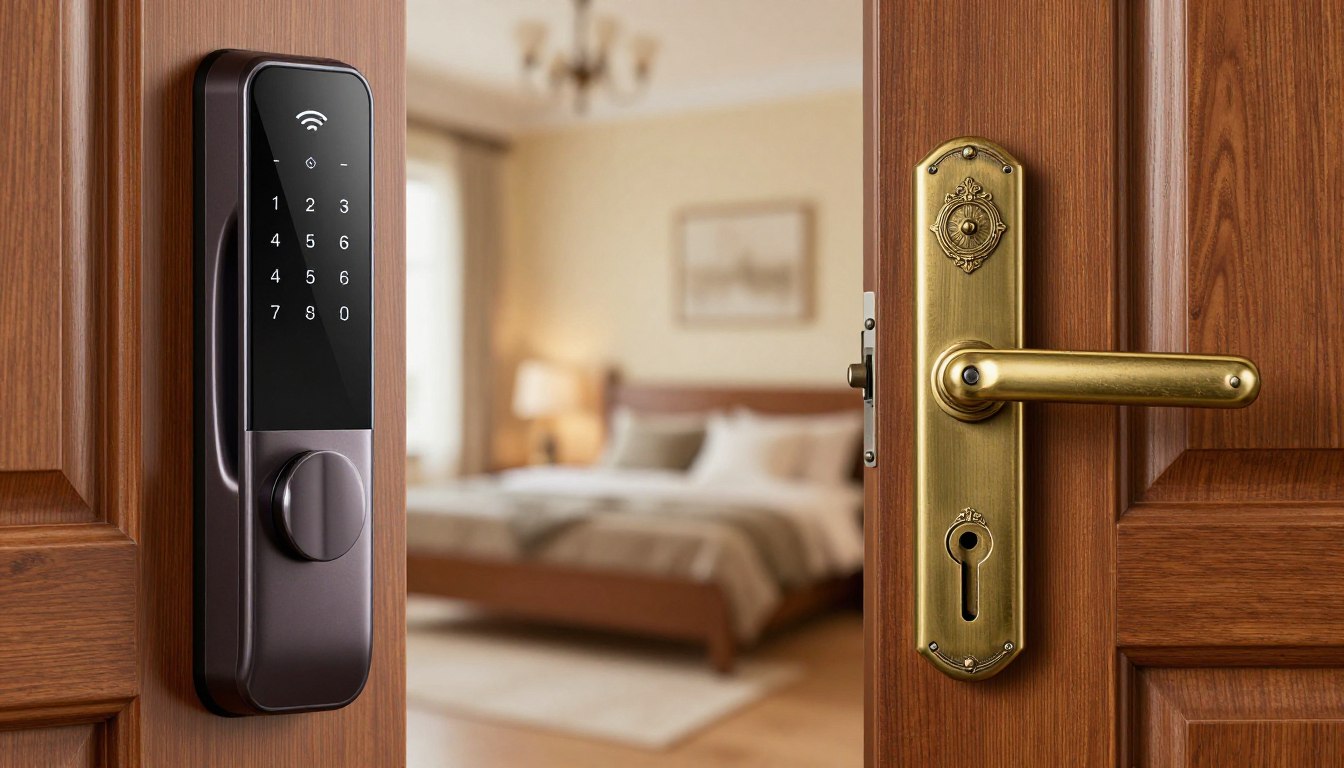
Did you know that nearly 34% of burglars just walk through the front door? This fact shows why choosing the right home security is crucial for your peace of mind. Whether you’re updating your home or building a new one, the debate between smart locks vs traditional locks is more important than ever.
Technology has changed how we interact with our homes. You might ask if modern digital locks are worth replacing your old deadbolt. Knowing the differences helps you pick the best fit for your lifestyle.
We’re here to help you make this choice. By looking at how these locks work, you’ll feel confident in picking the best option for your home. Let’s explore the details to find out which keeps your family safest.
Key Takeaways
- Front door security is the first line of defense for every homeowner.
- Modern hardware offers convenience features like remote access and temporary codes.
- Classic deadbolts remain highly effective and require no batteries or internet.
- Choosing the right system depends on your specific lifestyle and security needs.
- Technology integration makes managing home access easier than ever before.
Understanding the Basics of Smart Locks vs Traditional Locks
Your home’s safety depends on the difference between old-school locks and new tech. When you compare smart locks and traditional locks, you’re looking at the old way versus the new way. The old way is solid, reliable, and simple. The new way is all about tech and ease.
Both types aim to keep your home safe. But they do it in very different ways. Knowing how they work can help you choose what’s best for you.
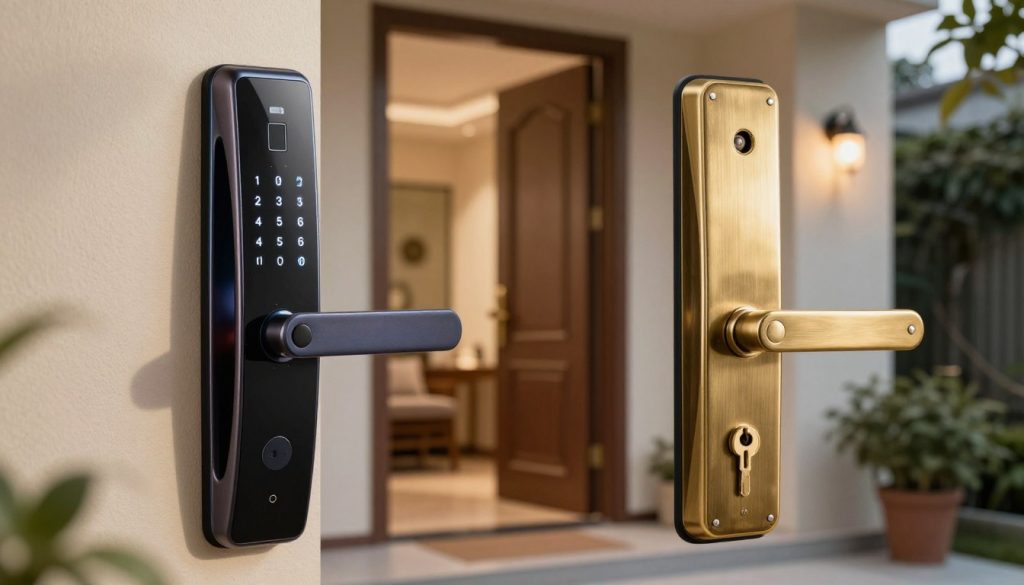
How Traditional Deadbolts Keep You Safe
Deadbolts have been the top choice for home security for years. They use simple, reliable bolt-action engineering. You need a physical key to open or close them.
They don’t have any electronic parts, so they can’t be hacked. As long as they’re installed right, your door stays locked until you unlock it.
“The beauty of a mechanical lock lies in its simplicity; it is a physical barrier that does not require a power source to remain effective.”
The Evolution of Home Access with Smart Technology
Smart lock technology has changed how we open our doors. Instead of keys, these locks use digital signals to let you in.
They offer cool features like remote access and guest codes. By linking your lock to your home network, you get more control than old locks can offer.
| Feature | Traditional Lock | Smart Lock |
|---|---|---|
| Access Method | Physical Key | App, Code, or Key |
| Power Source | None Required | Battery or Wired |
| Connectivity | None | Wi-Fi/Bluetooth |
| Maintenance | Low | Moderate |
Choosing between these locks comes down to your comfort with smart lock technology. Traditional locks are simple and reliable. But smart locks offer the flexibility that many people need today.
Key Advantages of Choosing Smart Locks
Smart locks make your daily life easier and more secure. They offer smart lock benefits that go beyond just locking and unlocking. They give you control and flexibility that old locks can’t match.
Unmatched Convenience for Your Daily Routine
Modern entry systems bring a lot of smart lock convenience to your life. No more fumbling for keys when your hands are full.
Keyless Entry and Remote Access
Keyless entry lets you unlock your door with a code, fingerprint, or smartphone. Remote access lets you let people in from anywhere. This means you’ll never get locked out again.
Temporary Guest Access Management
Managing visitors is easy with digital keys. You can give guests access without hiding a spare key. These smart lock advantages let you control when guests can enter, keeping your home secure.
Advanced Security Features Beyond the Key
These devices do more than just unlock doors. They are a central hub for your home security. They offer smart lock features that let you track who’s coming and going.
Activity Monitoring and Real-Time Alerts
You’ll get alerts on your phone when someone enters or leaves. This digital log keeps you informed, whether you’re at work or on vacation. It’s great for tracking when the kids get home or when a delivery arrives.
Integration with Smart Home Ecosystems
These locks work well with your smart home setup. They connect with lights and cameras, creating automated routines. This smart lock convenience makes your home more connected and responsive to your needs.
| Feature | Smart Lock | Traditional Lock |
|---|---|---|
| Remote Access | Yes | No |
| Activity Logs | Yes | No |
| Guest Codes | Yes | No |
| Battery Backup | Yes | N/A |
Why Traditional Locks Remain a Reliable Choice
High-tech gadgets get a lot of attention, but traditional lock security is key to keeping homes safe. There’s a peace of mind in knowing a system works every time you use it. Unlike modern tech, traditional locks use simple mechanics, not complex signals.
The Simplicity and Reliability of Mechanical Security
Mechanical deadbolts are simple and effective. You don’t have to worry about tech issues when you come home. Their design is straightforward, making them easy to use.
No Batteries or Software Updates Required
Traditional lock security doesn’t need batteries or updates. This means you won’t get locked out because of a dead battery or update issue. It’s a reliable choice that works in any weather.
Immunity to Digital Hacking Attempts
These locks don’t connect to the internet, so they can’t be hacked remotely. Your home is safe from digital threats. This physical security is something many homeowners value.
“The most reliable security systems are often the ones that do not rely on a network to function. Mechanical integrity remains the gold standard for physical access control.”
Cost-Effectiveness and Ease of Installation
Choosing a mechanical lock is a smart money move. These systems offer strong protection without the high cost of smart home tech.
Lower Upfront Investment
A good deadbolt is cheaper than a smart lock. It’s perfect for securing your home on a budget. You get durable protection without ongoing app or subscription fees.
Universal Compatibility with Existing Doors
Most American doors are ready for standard locks. You can install a new lock in minutes without changing your door. It’s a simple upgrade that fits your home.
| Feature | Traditional Lock | Smart Lock |
|---|---|---|
| Power Source | None Required | Batteries/Hardwired |
| Maintenance | Minimal | Updates/Charging |
| Hacking Risk | Zero | Potential Digital Risk |
| Installation | Standard/Easy | Complex/Configuration |
Conclusion
Choosing the right front door security is a personal choice. It’s about finding the right mix of modern tech and old-school security. You now know the pros and cons of digital locks versus traditional ones.
If you like the idea of controlling your door from afar, smart locks are a great choice. Brands like August and Schlage offer features that fit well with your smart home. They give you control that old locks can’t.
On the other hand, if you want something easy to use and no batteries needed, a standard deadbolt might be better. Yale and Kwikset offer simple, reliable options. Think about your daily life and choose what makes you feel safest.